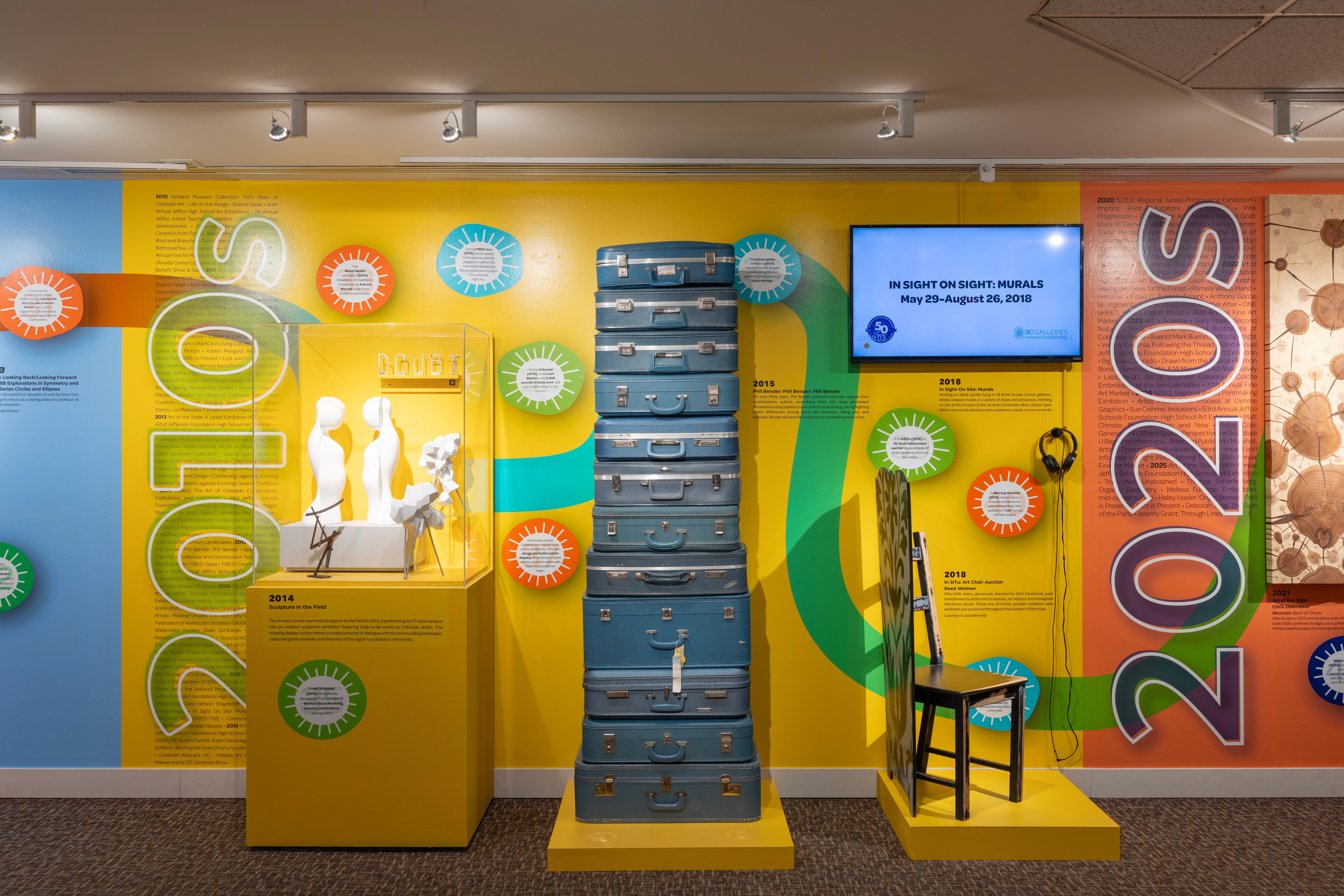
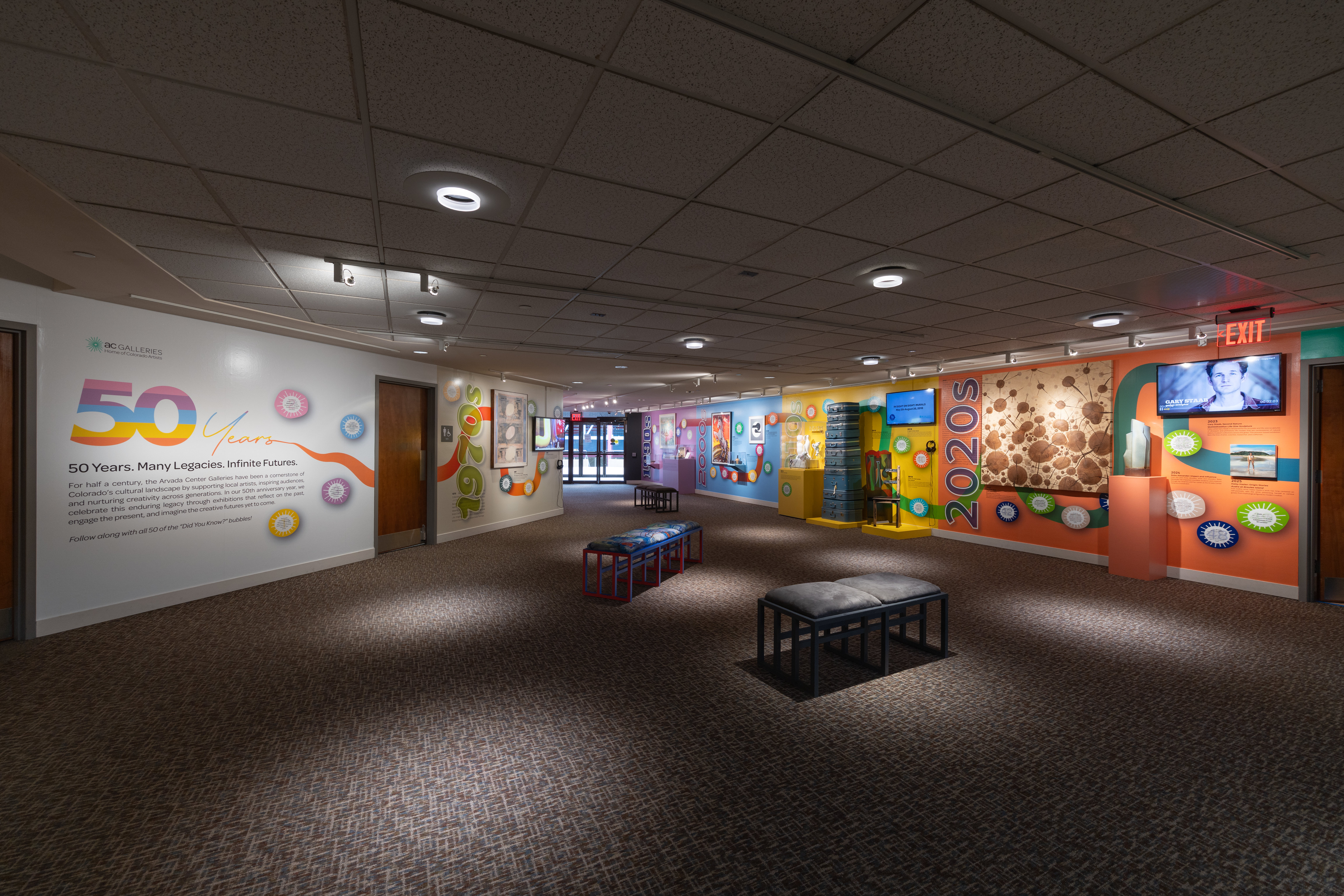
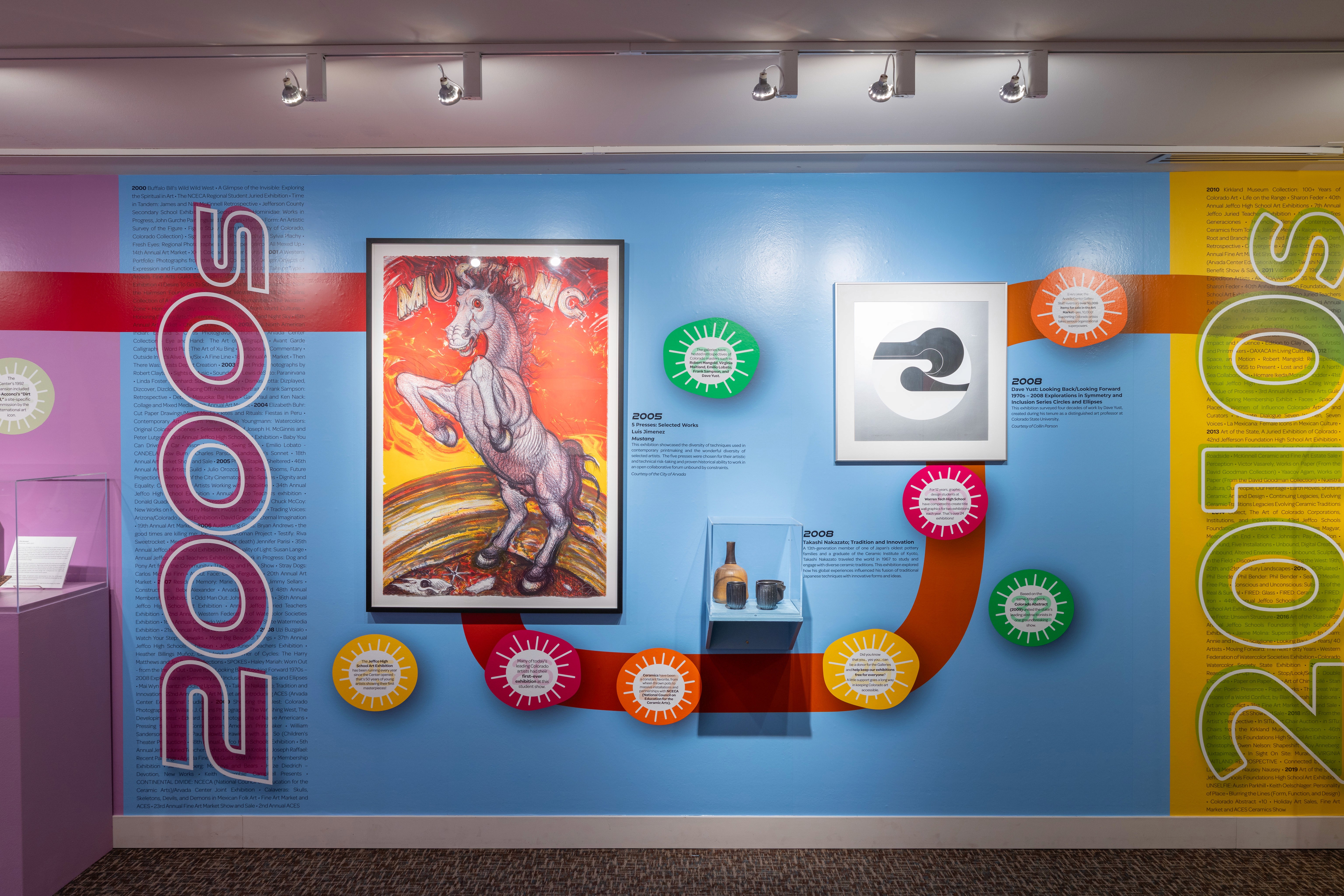
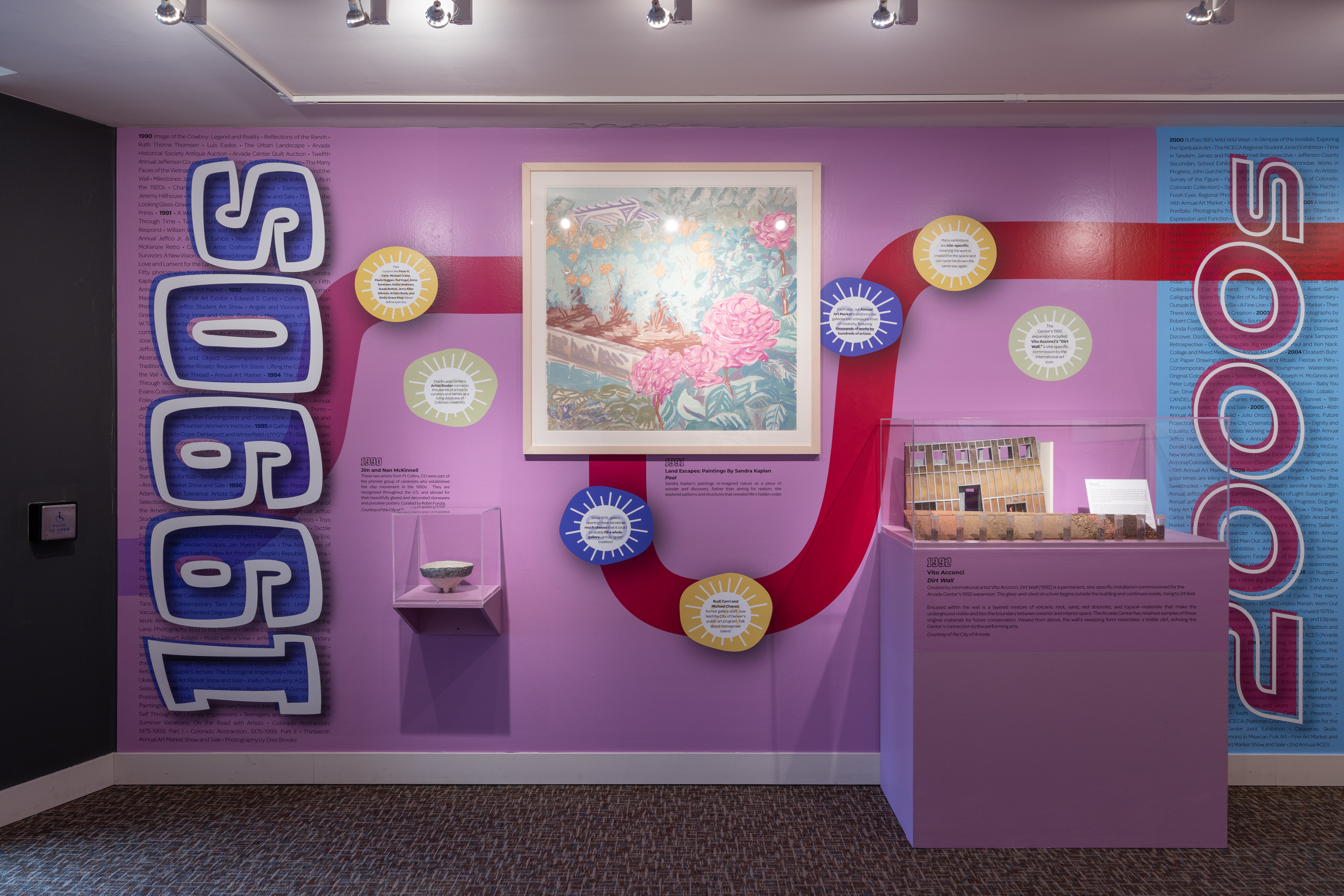
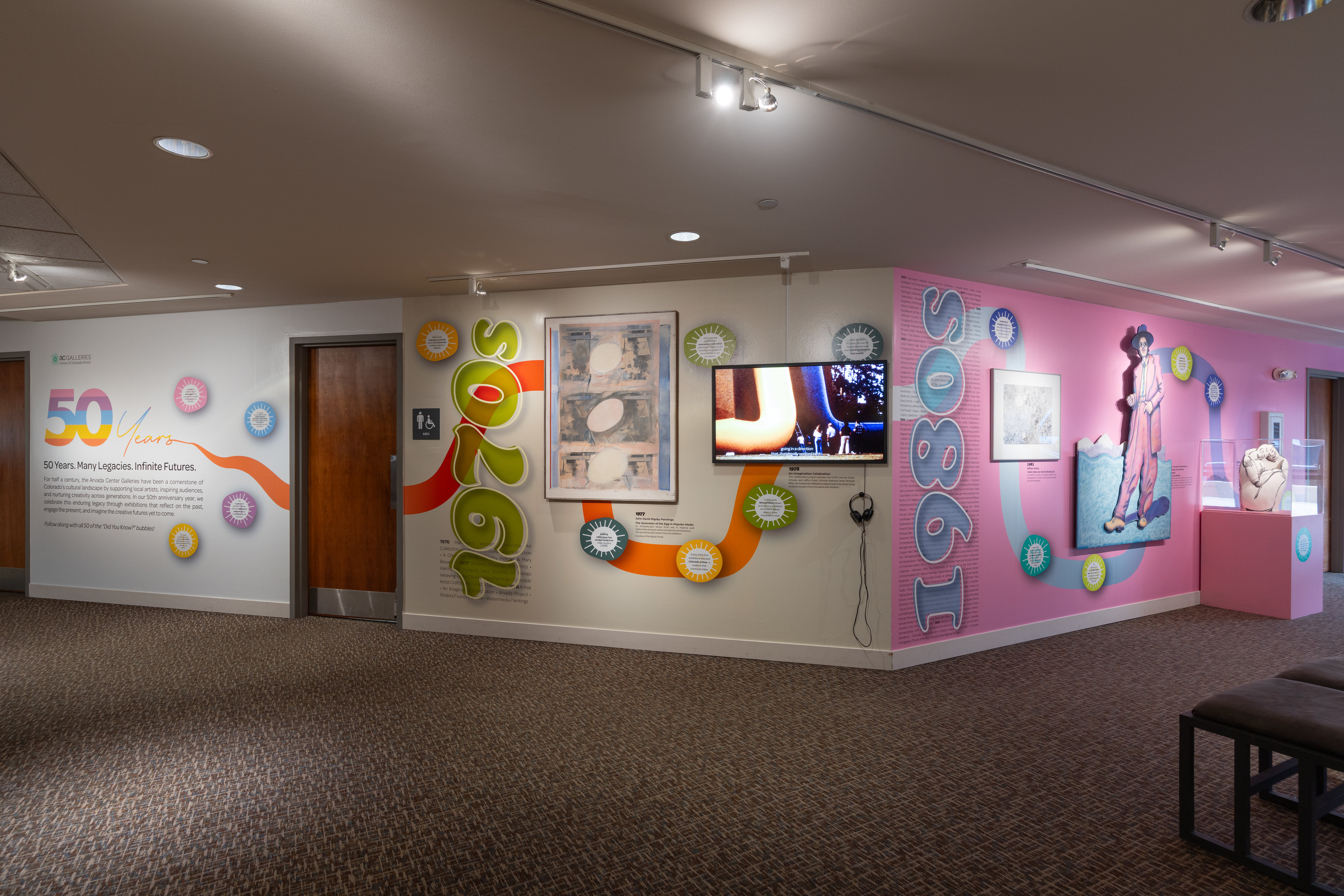
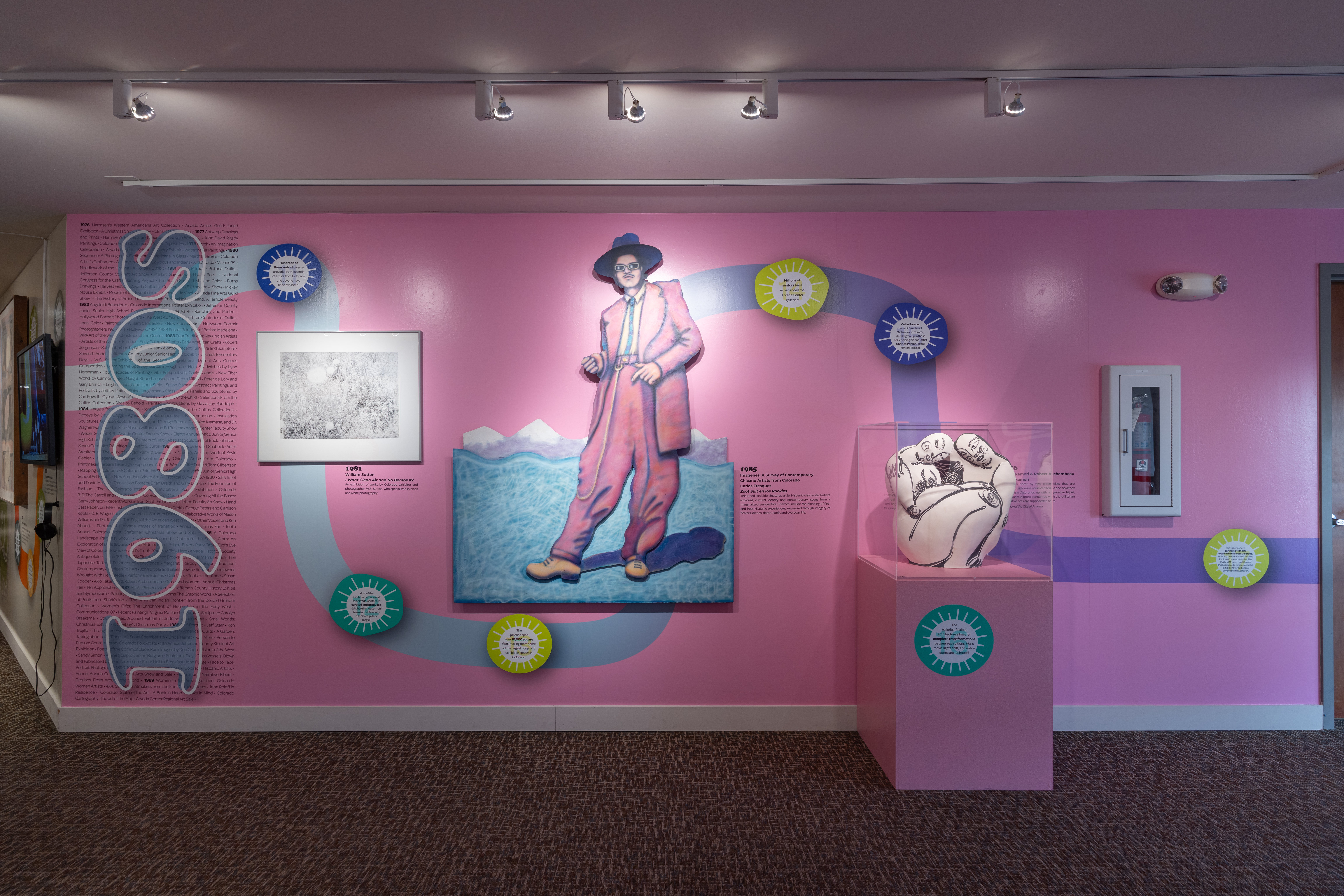
Working closely with Collin Parson, Exhibition Manager and Curator, I translated curatorial vision into a flexible design framework that supports layered storytelling at scale. The system is anchored by bold typography, a continuous graphic pathway, and a color strategy that shifts across decades, creating rhythm, differentiation, and intuitive wayfinding throughout the space.
A key challenge of the project was designing within real-world spatial and production constraints. The exhibition needed to accommodate a wide range of artworks with varying dimensions, requiring coordination with artists to confirm measurements and ensure proper placement. At the same time, I designed around existing environmental elements such as doors, fire safety equipment, and wayfinding signage so the visual system could flow uninterrupted across the gallery.


Concept Mockup
A key challenge of the project was designing within real-world spatial and production constraints. The exhibition needed to accommodate a wide range of artworks with varying dimensions, requiring coordination with artists to confirm measurements and ensure proper placement. At the same time, I designed around existing environmental elements such as doors, fire safety equipment, and wayfinding signage so the visual system could flow uninterrupted across the gallery.
Production added another layer of complexity. All graphics were printed in four-foot sections, requiring the design to be modular and precisely aligned so seams would disappear within the overall pattern. To support installation, I created a detailed visual guide paired with a spreadsheet that mapped every graphic segment by size, placement, and corresponding decade. This tool ensured accuracy across the full installation and allowed the team to efficiently execute the system at scale.
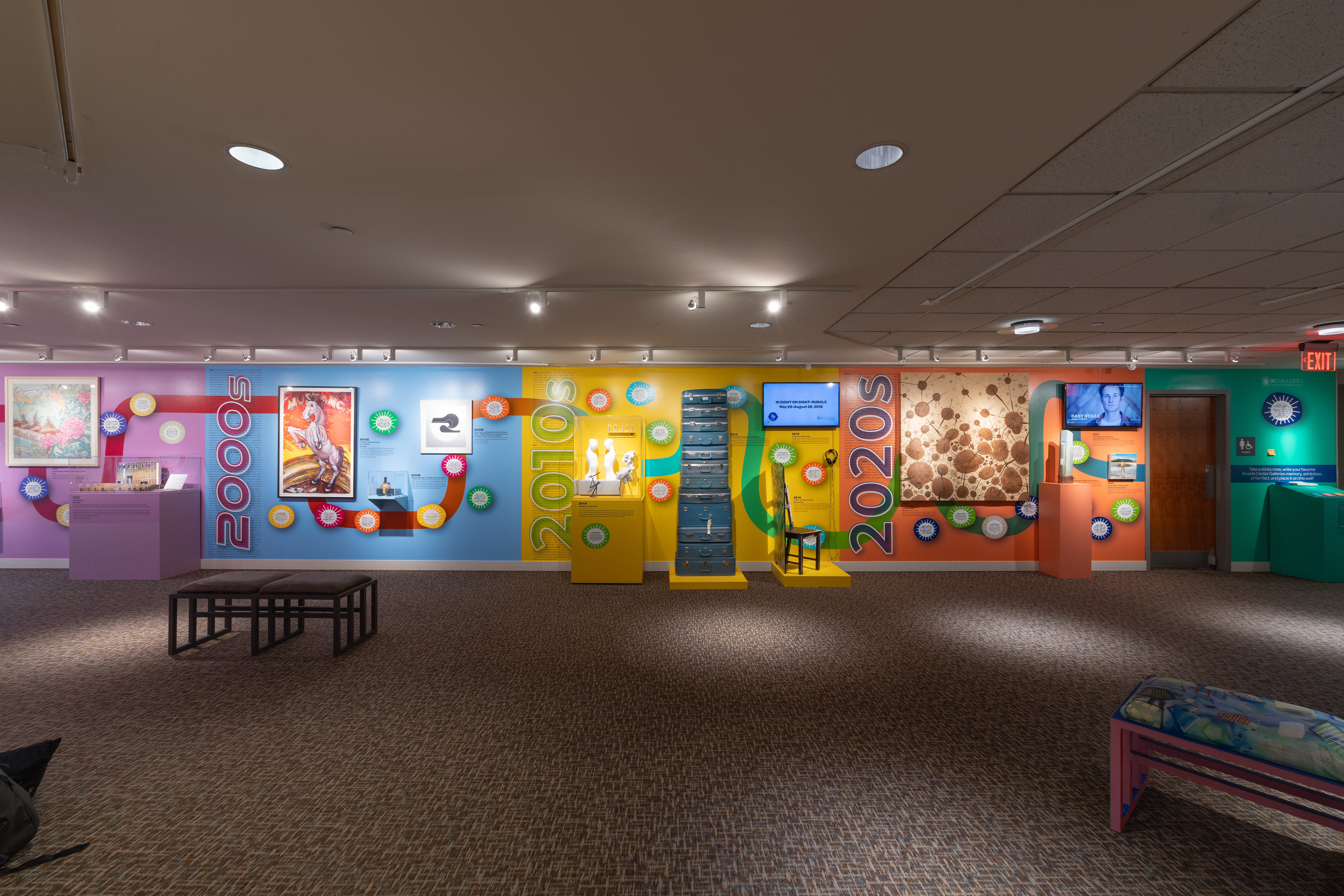
Final Installation
To deepen engagement, I integrated 50 curated “Did You Know?” facts throughout the exhibition, encouraging moments of pause and discovery while reinforcing the breadth of the Center’s history. The experience culminates in a final, color-saturated interactive wall where visitors are invited to reflect and contribute. Guests can write their favorite Arvada Center memory, exhibition, or fun fact on a sticky note and add it to the installation, extending the timeline into the present.
In partnership with Warren Tech’s graphic design program, the instructors printed and installed the exhibition graphics, resulting in the largest mural installation by square footage in the program’s history.
Designed to remain on view for the full calendar year, the exhibition is the longest-running in the Arvada Center’s history. The final result is a durable, adaptable system that unifies storytelling, wayfinding, and visual identity while creating an engaging, year-long visitor experience.